By Greg Martin
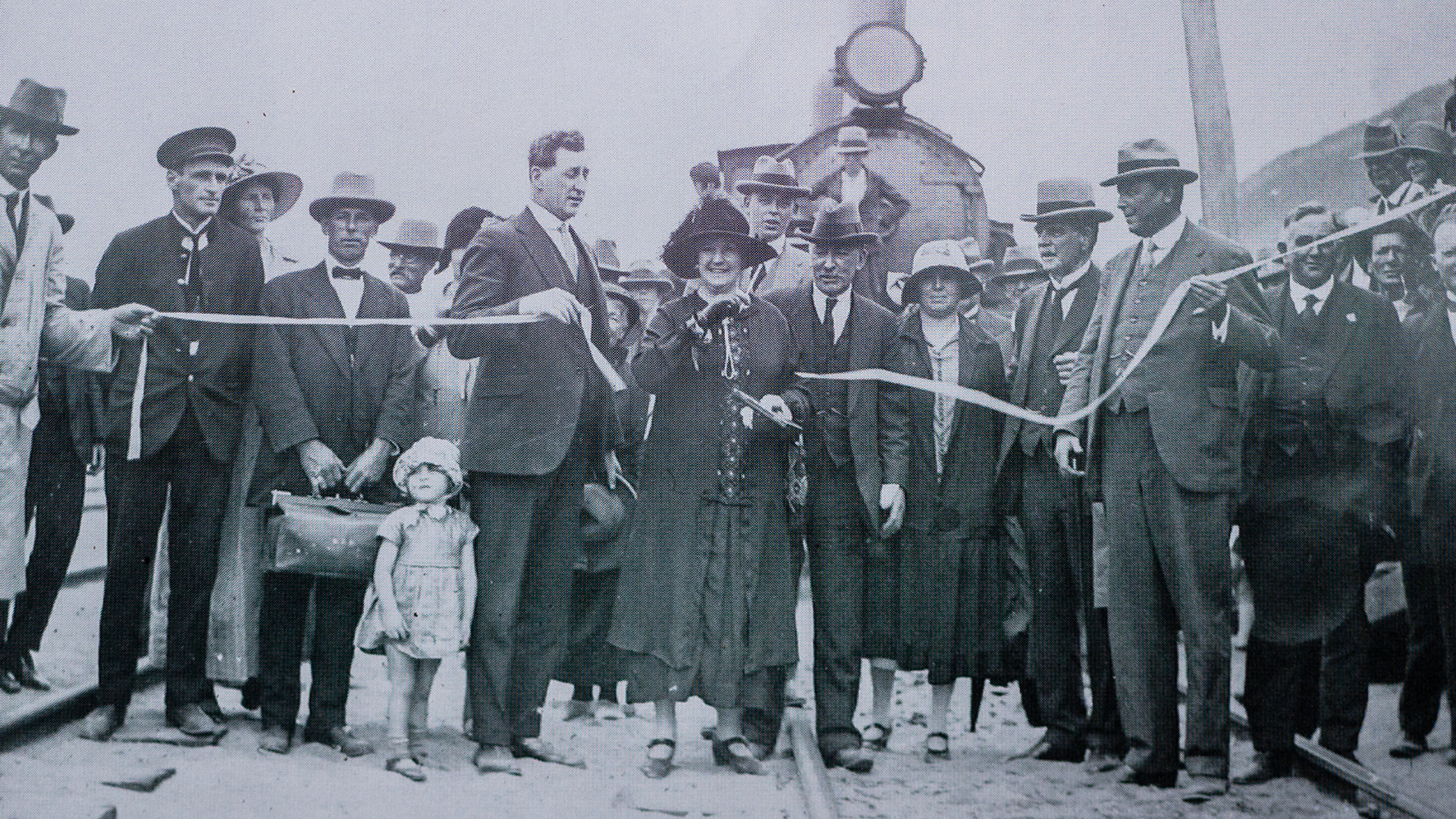
This year marks the centenary of the Richmond–Kurrajong Railway Line, affectionately known as the Pansy Line.
To celebrate, the Kurrajong-Comleroy Historical Society (KCHS) will host a ‘Virtual Tour’ at Panthers North Richmond at 1pm on Sunday, 22 November.
Bookings are required, so secure your spot by purchasing tickets – $15 for adults and $10 for members – through the society’s website: www.kurrajoghistory.org.au/pansycent.php.
The event includes a one-hour slideshow with expert commentary from KCHS president David Griffiths. Afterwards, David and fellow members will lead a short walk to one of the Pansy’s river bridges.
Copies of the popular Pansy book will also be available to purchase on the day.
Officially opened on 20 November 1926, the line provided regular passenger and farm freight services between Richmond and the Kurrajong foothills for the next 26 years.
The Pansy – a steam locomotive pulling two carriages – crossed East Market Street, travelled beside Richmond Park along March Street, then headed down towards the Hawkesbury River.
After leaving the North Richmond Bridge, it veered right before crossing the main road where the Grose Vale Road traffic lights now stand.
The seven-kilometre journey took around 35 minutes, with six stops between Richmond and Kurrajong. Kurrajong Station stood on the site of the current electricity substation near Saplings Nursery.
After leaving Richmond, the train stopped at Phillip, just before the Hawkesbury River crossing, and North Richmond. Further along were Red Cutting, just before Redbank Creek, and three stops on privately owned properties.
These were Kemsley, on Redbank Road; Thompson’s Ridge, where Kuyper Christian School now stands; and Nurry, further up the hill, before the final arrival at Kurrajong.
Only North Richmond and Kurrajong were staffed. The other stops, known as halts, were smaller, simpler places where passengers could quickly hop on or off.
The carriages were open, with reversible seats and overhead luggage racks. Some even had a toilet – pretty high-tech back then!
During school holidays, the train pulled five carriages to carry holidaymakers up to Kurrajong, where they stayed at local guesthouses.
The line was unfenced, so drivers had to keep their eyes peeled for livestock wandering in from nearby farms.
Trains travelled at 26km/h, with a reduced limit of 19km/h beside Richmond Park and along March Street.
Across its 26 years of service, the Pansy was involved in only a handful of accidents. One collision with a car at a level crossing resulted in a fatality.
The end of the line came in June 1952, when flooding rains forced services to be suspended.
Continued downpours buckled the tracks and caused landslides in the last cutting before Kurrajong. With the service becoming increasingly unprofitable, the NSW Government decided to close it permanently.
The announcement sparked a storm of protest from residents.
Locals claimed, rather optimistically, that bulldozers could clear the slip blocking the line in a matter of hours. The government, however, stood by its decision.
Over the years, attempts were made to revive the line as a tourist railway, but none got off the ground.
With the huge growth in population and traffic on the western side of the river, I’m sure, as eggs is eggs, that plenty of residents would love to see a service like the Pansy return!


Join Our Community of Locals Who Care
Stay connected with the latest stories, community highlights, and local business features — delivered monthly straight to your inbox.