By Janakan Seemampillai
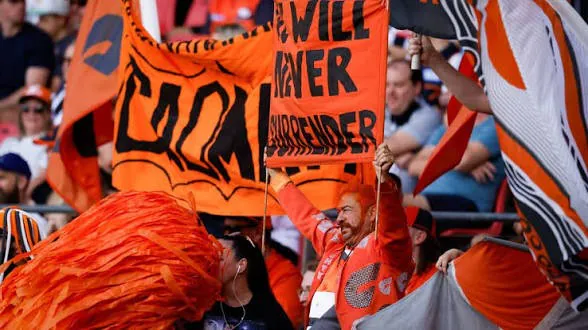
The Greater Western Sydney (GWS) Giants were created with one of the most ambitious objectives in Australian sport: to establish Australian football in the nation’s fastest-growing and most diverse region. More than a decade after entering the AFL, the club has achieved remarkable success on the field, regularly playing finals, developing elite talent and reaching the competition’s biggest stage. Yet one question remains: has it connected with Western Sydney in the way the AFL originally envisioned?
If the answer is no, perhaps it is time for a bold but logical change. The GWS Giants should become the West Sydney Giants and commit to playing all home matches in Western Sydney.
At the heart of the issue is identity.
Sport is built on tribalism. Supporters do not follow teams simply because they win. They follow clubs that represent who they are, where they come from and what they stand for. Many of Australia’s strongest sporting clubs have identities deeply rooted in place. Manly, Parramatta, South Sydney, Canterbury, Penrith, Geelong, Richmond and Collingwood all evoke a sense of belonging. Their names immediately connect club and community.
The acronym “GWS” does not have the same effect.
While administrators, journalists and AFL supporters understand what it stands for, it is not a term residents commonly use in everyday life. People identify with Parramatta, Blacktown, Penrith, Liverpool, Campbelltown or simply Western Sydney. Few describe themselves as being from “GWS”. The club’s name feels more like a geographical designation on a planning map than a community identity.
For a region that values authenticity, hard work and local pride, that distinction matters.
West Sydney Giants would immediately communicate who the club represents. It would provide a clearer identity and could build a stronger emotional connection with potential supporters, drawing on an established sense of regional belonging.
The second challenge is commitment.
The Giants play several home matches in Canberra each season. There are understandable commercial reasons for the arrangement — $2.85 million a year, in fact. Canberra also supports the AFL’s broader strategy in the ACT. But every home game played outside Western Sydney is a missed opportunity to strengthen the club’s connection with local supporters. Sacrificing that income could serve the club’s long-term interests.
The Easter Show should not be a reason to leave Western Sydney during a crucial part of the season. When ENGIE Stadium is unavailable, Blacktown offers an alternative for matches expected to draw smaller crowds.
Expansion clubs cannot build supporter bases through television broadcasts and marketing campaigns alone. They need a regular physical presence. Generations of fans are created when children attend games, collect autographs, make memories with family and develop an emotional attachment to a club.
That process becomes harder when a significant share of home fixtures is played hundreds of kilometres away.
If Western Sydney is the Giants’ priority, every home game should be played here. That commitment would send a powerful message to existing supporters and potential fans: this club belongs here and is here to stay.
The Giants’ challenge extends well beyond competing against other AFL clubs. In Western Sydney, they must also compete with established sporting cultures.
Rugby league dominates many communities, with the Wests Tigers, Parramatta Eels, Penrith Panthers and Canterbury Bulldogs deeply ingrained in local sporting life. Soccer has strong participation and cultural connections, while the Western Sydney Wanderers have a passionate, dedicated fan base. Cricket has deep local roots, including within the region’s many migrant communities, and basketball continues to grow. Every weekend, families have countless sporting options.
Unlike Melbourne, Adelaide or Perth, where Australian football is woven into the sporting landscape, Western Sydney cannot be taken for granted as an AFL market. The game must earn its relevance.
That means the Giants must become more than a successful AFL team. They must become a community institution.
The club needs an even stronger grassroots presence, with sustained links to schools, junior clubs and local councils rather than occasional promotional appearances. It also needs more local players coming through its pathways. Giants Academy product Ethan Matthews, from the Ingleburn Magpies and South West Sydney Blues, is a promising example and is expected to be a top-10 draft pick.
Players and coaches need to be actively involved across the region. Above all, residents need to feel the club represents their communities, values and aspirations.
The Wanderers offer a useful example. Their rapid success was not simply about winning matches. Supporters felt the club represented Western Sydney. It tapped into an existing identity, brought different parts of the soccer community together and gave supporters a sense of ownership.
The Giants have struggled to create that same connection. Their football operations are highly professional and generally successful, but their relationship with the region remains weaker than it should be. Despite grand final appearances and strong performances across their 14 years, supporters have not flocked to the club.
This is not a criticism of the players or coaches. In many respects, the Giants have exceeded expectations on the field. But sporting success alone does not create lasting loyalty.
People do not pass down premiership points to their children. They pass down identity.
The AFL’s Western Sydney experiment is far from a failure. The Giants have established themselves as a legitimate force in the competition and helped grow Australian football in New South Wales. Still, having a team in a region is different from truly belonging to it.
A rebrand to the West Sydney Giants, backed by a commitment to playing every home game in Western Sydney, would be more than a cosmetic change. It would signal that the club is committed to being part of the community and give local people a stronger reason to call it their own.
In a region where sporting loyalty must be earned, that message could prove more valuable than any marketing campaign. The future of Australian football in Western Sydney will depend on more than wins and losses. It will depend on whether people feel the club belongs to them.
For the Giants, the next stage of growth may be about becoming a truly West Sydney football club.


Join Our Community of Locals Who Care
Stay connected with the latest stories, community highlights, and local business features — delivered monthly straight to your inbox.